
Safely Towing Your Vehicle: Tips to Prevent Further Damage
Top Tips for Safely Towing Your Vehicle Without Causing Additional Damage: Comprehensive Vehicle Towing Safety Guidelines

Towing a vehicle carries a real risk of damage. Knowing safe towing procedures protects both the vehicle and those involved. This article sets out essential, practical guidance: preparation before towing, towing methods that minimise damage, required equipment and safety gear, common mistakes to avoid, and emergency towing advice for stranded motorists. Follow these recommendations to reduce damage and ensure a smoother towing process.
How Do You Prepare Your Vehicle for Safe Towing?
Preparing your vehicle before towing reduces the chance of further damage. Key checks include fluid levels, tyre condition, and battery state. These steps help ensure the vehicle will withstand transport without added harm.
D and C Towing Service specializes in vehicle towing and roadside assistance, focusing on preventing additional damage during transport. Their expertise can help you understand the importance of these preparation steps and provide consultations for your specific needs.
What Are the Essential Vehicle Preparation Steps Before Towing?

Before towing your vehicle, perform these preparation steps:
- Check Fluid Levels: Ensure that all fluids, including oil, coolant, and transmission fluid, are at appropriate levels to prevent overheating or mechanical failure during towing.
- Inspect Tires: Check tire pressure and tread condition. Properly inflated and well-maintained tires are crucial for safe towing.
- Examine Battery Condition: A weak or dead battery can lead to complications during towing. Ensure your battery is fully charged and in good condition.
These preparation steps reduce the likelihood of damage during transport.
How Does Proper Vehicle Inspection Reduce Towing Risks?
A thorough pre-tow inspection identifies issues that could lead to damage. A proper inspection includes:
- Identifying Potential Issues: Look for any visible signs of wear or damage that could worsen during towing.
- Preventing Further Damage: Addressing minor issues before towing can prevent them from escalating into more significant problems.
- Ensuring Safety During Towing: A well-inspected vehicle is less likely to experience mechanical failures that could compromise safety on the road.
Prioritising inspection improves safety and reduces the risk of avoidable damage.
Which Towing Methods Minimize Vehicle Damage?
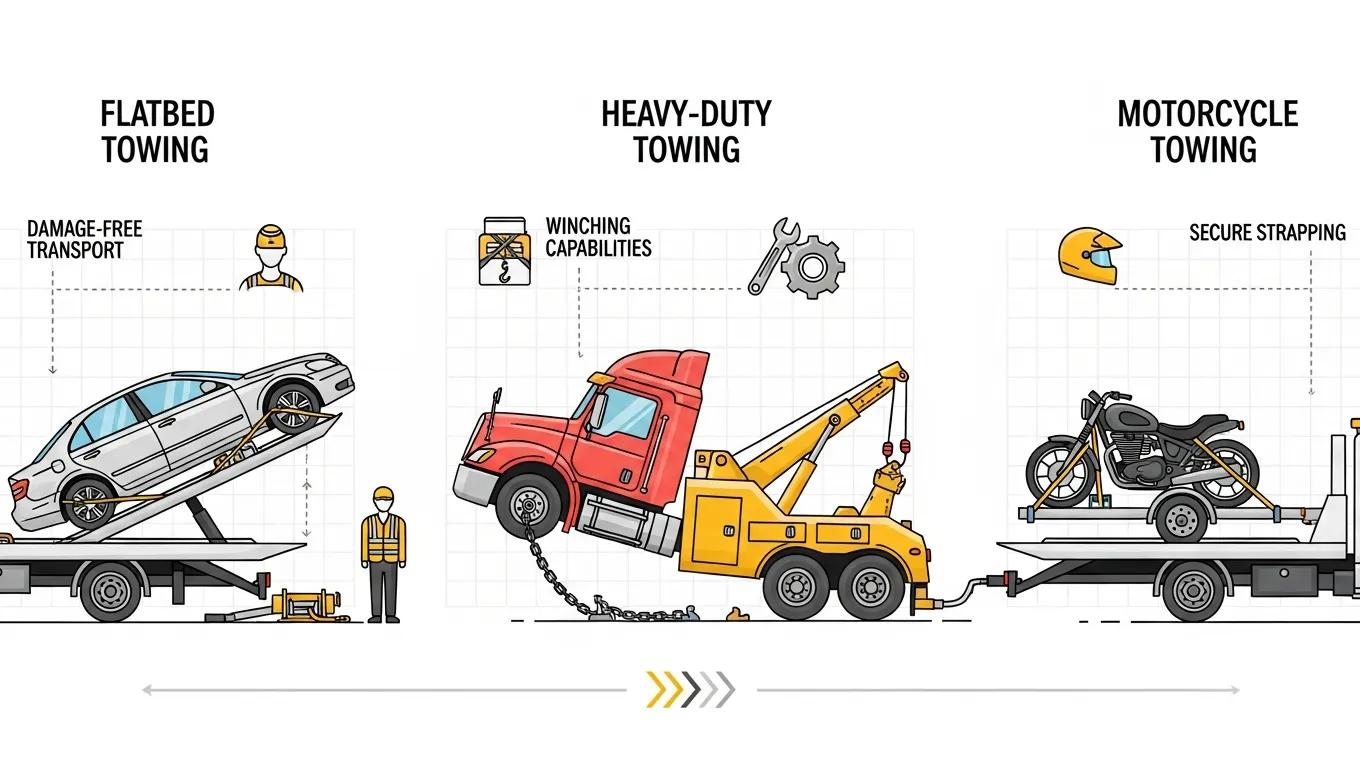
Selecting the correct towing method is key to minimising damage. Different methods suit different vehicle types and conditions; choose accordingly.
What Are the Best Practices for Different Vehicle Towing Methods?
When towing a vehicle, consider the following best practices based on the type of vehicle:
- Flatbed Towing: Ideal for most vehicle types, flatbed towing minimizes contact with the ground, reducing the risk of damage.
- Heavy-Duty Towing: For larger vehicles, using a heavy-duty tow truck ensures that the vehicle is adequately supported and secured.
- Motorcycle Towing: Specialized motorcycle trailers are designed to safely transport motorcycles without causing damage.
Choosing the appropriate towing method reduces the risk of transport-related damage.
How Do You Choose the Right Towing Method for Your Vehicle Type?
To choose the right towing method, consider the following factors:
- Consider Vehicle Type: Different vehicles require different towing methods. Ensure you understand the specifications of your vehicle.
- Communicate with Towing Service: Discuss your vehicle’s needs with your towing service to ensure they use the appropriate method.
- Verify Towing Company Experience: Choose a towing company with experience in handling your specific vehicle type to ensure safe transport.
These considerations help you select the most suitable towing method for your vehicle.
What Essential Equipment and Safety Gear Ensure Damage-Free Towing?
Correct equipment and safety gear are essential to protect the vehicle during towing. Proper tools secure the vehicle and reduce risk during transport.
Which Towing Equipment Is Critical for Vehicle Safety?
Essential towing equipment includes:
- Tow Trucks: Different types of tow trucks, such as flatbed and heavy-duty, are designed for specific towing needs.
- Towing Straps: High-quality towing straps are necessary for securely attaching the vehicle to the tow truck.
- Safety Gear: Items like reflective vests and cones help ensure visibility and safety during the towing process.
Using appropriate equipment significantly lowers the chance of damage during towing.
How Does Proper Use of Safety Gear Prevent Additional Vehicle Damage?
Using safety gear correctly prevents damage and enhances safety. Key benefits include:
- Visibility of Towing Personnel: Wearing reflective gear ensures that towing personnel are visible to other drivers, reducing the risk of accidents.
- Alerting Other Drivers: Using cones and warning signs helps alert other motorists to the towing operation, preventing collisions.
- Protecting the Vehicle: Safety gear can help secure the vehicle and prevent it from shifting during transport, reducing the risk of damage.
Prioritising safety gear improves overall tow safety and protects the vehicle.
What Common Towing Mistakes Should Be Avoided to Protect Your Vehicle?
Avoiding common towing mistakes is essential to prevent unnecessary vehicle damage. Many errors can cause serious issues during transport.
Which Errors Increase the Risk of Vehicle Damage During Towing?
Common errors that increase the risk of damage include:
- Improper Securing of Vehicles: Failing to secure the vehicle properly can lead to it shifting or falling during transport.
- Ignoring Vehicle Condition: Not addressing existing issues before towing can exacerbate problems during transport.
- Using Incorrect Towing Methods: Choosing the wrong towing method for your vehicle type can lead to damage.
Recognising these errors allows you to take steps to avoid them and protect your vehicle.
How Can You Correctly Avoid These Common Towing Mistakes?
To avoid common towing mistakes, consider the following strategies:
- Follow Best Practices: Adhere to established best practices for securing and towing vehicles.
- Communicate with Towing Service: Ensure clear communication with your towing service about your vehicle’s condition and needs.
- Seek Professional Assistance: When in doubt, consult with professionals to ensure safe towing practices.
Implementing these strategies will help minimise the risk of damage during towing.
What Emergency Towing Tips Help Stranded Motorists Avoid Further Damage?
In an emergency, prompt and correct actions can prevent further damage. Quick, effective steps protect you and the vehicle.
How Should You Respond When Your Vehicle Needs Immediate Towing?
When your vehicle requires immediate towing, follow these steps:
- Move to a Safe Location: If possible, drive your vehicle to a safe area away from traffic.
- Turn on Hazard Lights: Activate your hazard lights to alert other drivers of your situation.
- Prepare Documentation: Have your vehicle’s documentation ready for the towing service, including registration and insurance information.
These actions improve safety and reduce the chance of further damage.
For more detailed information and professional assistance, visit our comprehensive vehicle towing safety guidelines to ensure your vehicle is handled with the utmost care during transport.
Frequently Asked Questions
What should I do if my vehicle breaks down in a dangerous location?
If your vehicle breaks down in a hazardous area, prioritise safety. Move the vehicle to a safe location away from traffic if you can. Turn on your hazard lights. If you cannot move the vehicle, remain inside with your seatbelt fastened until help arrives. Call roadside assistance and give your exact location. Keep your vehicle documentation available for the towing service.
How can I ensure my vehicle is towed without causing damage?
To reduce the risk of damage, prepare the vehicle: check fluid levels, inspect tyres, and ensure the battery is in good condition. Select the correct towing method, for example flatbed towing for most cars. Communicate clearly with the towing service and confirm they will use appropriate equipment. These steps will lower the chance of damage.
What are the signs that my vehicle may not be safe to tow?
Signs a vehicle may be unsafe to tow include visible tyre damage, leaks from the engine or transmission, and a dead or weak battery. Vehicles recently involved in an accident or with major mechanical faults may also be unsafe to tow. Always perform a thorough inspection and consult a professional if you identify concerning signs.
Can I tow a vehicle with a manual transmission differently than an automatic?
Yes. Manual and automatic transmissions have different towing requirements. Manual vehicles can often be towed with the drive wheels on the ground, but consult the owner’s manual for specific guidance. Automatic vehicles typically require flatbed towing to prevent transmission damage. Always follow the manufacturer’s recommendations.
What should I do if my vehicle is towed without my permission?
If your vehicle is towed without your permission, locate the towing company responsible. Gather documentation such as registration and proof of ownership. Contact the towing company to determine the reason for the tow and any fees. If you believe the tow was unlawful, contact local authorities or seek legal advice to resolve the issue.
How can I find a reliable towing service?
To find a reliable towing service, ask for recommendations and review online ratings. Choose companies that are licensed and insured, offer 24/7 service, and have experience with your vehicle type. A dependable towing service will prioritise safety and professional customer care.
What are the costs associated with towing a vehicle?
Towing costs vary by distance, vehicle type, and time of day. Local tows typically range from $75 to $125; long-distance tows can cost significantly more. Additional fees may apply for specialised towing or after-hours assistance. Request a detailed estimate before agreeing to a tow to avoid unexpected charges.
Conclusion
Knowing the essential steps for safe towing reduces the risk of damage and improves the overall experience. Prepare your vehicle, choose the correct towing method, and use proper equipment to protect your investment and enhance road safety. For further guidance and professional assistance, consult our comprehensive vehicle towing safety guidelines and visit our site.